


It was a long, long time ago when the famous astronomer and astrologer Tycho de Brahe was born. It will actually be 470 years this Advent time! Although he was born in Copenhagen, Denmark, he spent most of his life in Prague. Tycho de Brahe was invited to Prague by Holy Roman Emperor Rudolf II while travelling around Europe. Prague appealed to him greatly, so he took the job of Imperial Court Astronomer, where he met his new colleague and rival, the astronomer Kepler
Tycho Brahe: The Astronomer Buried in Prague
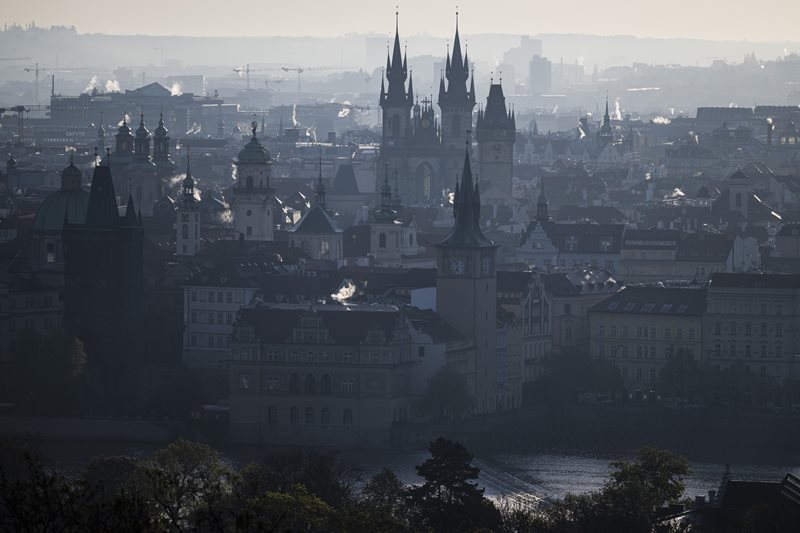
The story of Tycho Brahe’s death is closely linked to one of Prague’s most striking historic landmarks: the Gothic Church of Our Lady before Týn, commonly known as Týn Church. Inside, visitors can find the tomb of the renowned Danish astronomer and admire the church’s remarkable collection of historic artworks.
The church’s twin towers are far from identical. The southern tower is slightly taller and broader than its northern counterpart. Rising approximately 80 metres above Prague’s Old Town Square, they create one of the city’s most recognisable silhouettes.
Brahe’s tomb has been opened for scientific examination, including investigations in 1901 and 2010. Researchers sought to establish whether the astronomer had been poisoned, as rumours surrounding his death had long suggested.
Was Tycho Brahe Murdered by Johannes Kepler?
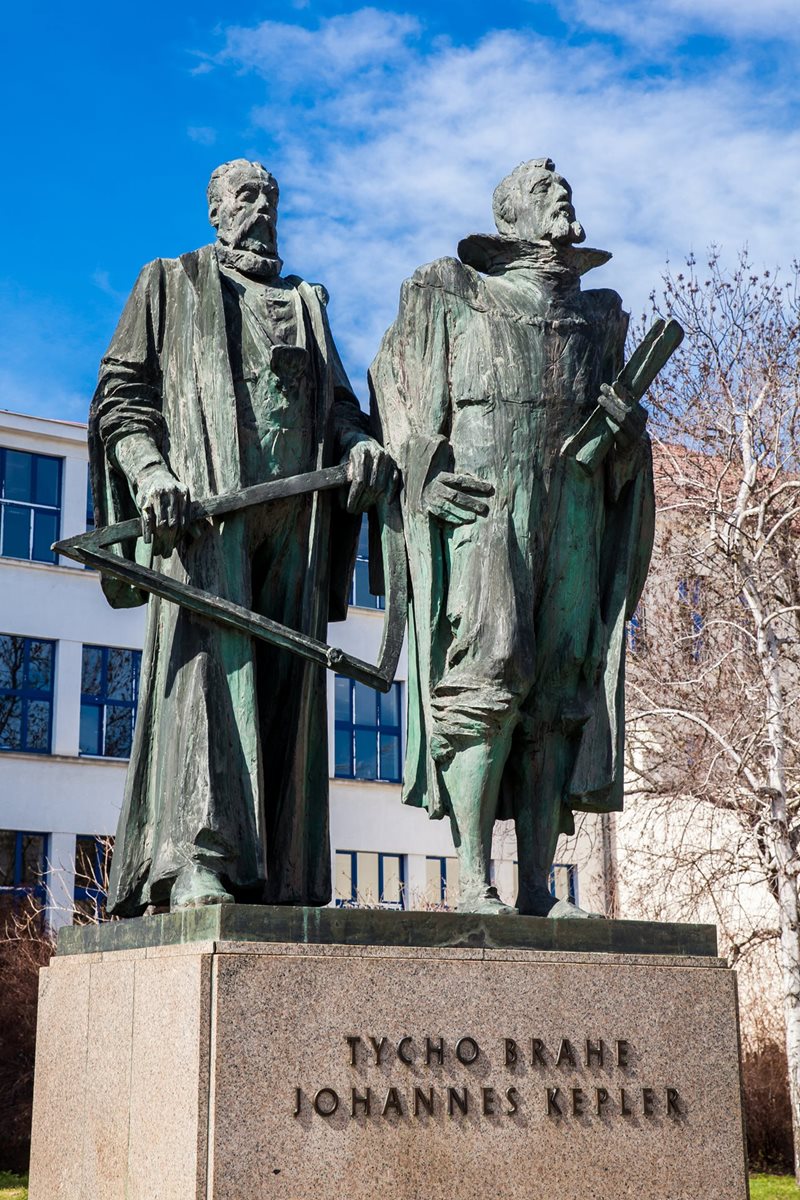
Shrouded in mystery, Tycho’s death gave rise to much gossip and many rumours. One of them was that he was murdered by his great rival in the field, Kepler. The fact that traces of mercury were discovered in his body supported this speculation. The mercury could have brought about kidney failure, which is now believed to be the most likely cause of his death.
However, how the mercury found its way into his body remains a mystery. Unfortunately, modern findings have done away with any murder mystery, because the 2006 research confirmed the presence of mercury in his body, but at a minimum amount, so the final verdict is death by natural causes.
Faust House Prague: The Legend of a Deal with the Devil

The times of astronomer Tycho de Brahe are also connected with a legend of the mysterious Faust. Situated on Charles Square in the New Town, Mladota Palace or Faust House is one of the most mystical buildings in Prague. Apparently, it was inhabited by the alchemist and mystic Edward Kelley, who worked as a court alchemist of Rudolph II for much of his life. The Legend of Faust is intrinsically connected with the house.
Throughout history various puzzling finds were made in the house – such as valuable wall drawings, walled up baby booties and skeletons of cats. The building was also believed to shelter a magic spring. It is no surprise at all that so much inspirational material led to the creation of mysterious rumours about the house. A hole discovered in the ceiling, big enough for a grown man to squeeze through, spawned the Faustian Legend.
Apparently, there is also an underground passage leading from the house to the New Town Hall. Faust House is situated next to the magnificent Dientzenhofer gate from around 1740. Originally built in the Gothic style, it received a Baroque makeover.
The Golem of Prague: A Legend from the Jewish Quarter

More of the mystery and mystique Prague is shrouded in is provided by the Legend of Golem. Is it really just a legend or is there a grain of truth in it? That will most likely never be known so we must content ourselves simply with legends. It will be up to you whether you believe it or not. Legend has it that Golem was created by Jewish Rabbi Löw to protect the Jewish ghetto from Anti-Semitic attacks, and would come alive only when a shem was inserted in its mouth. Supposedly, Golem was stored in the attic of the Old New Synagogue. If you fancy learning more about the legend along with some interesting facts about the Jewish community in Prague, then you should definitely pay a visit to the Jewish Museum.
Bestselling American author Dan Brown chose the mysterious city of Prague as the main setting for his novel The Secret of Secrets (2025), drawing on its rich history, mystical atmosphere and hidden corners. From Charles Bridge, Prague Castle and St. Vitus Cathedral to the magnificent Klementinum Baroque Library and the ancient Jewish Quarter of Josefov, the city’s iconic landmarks set the stage for Robert Langdon’s latest adventure. The story also brings Prague’s legendary Golem to life. Now, Prague’s enigmatic charm is set to captivate audiences once again as the novel is adapted for the screen by Netflix.
Vyšehrad: The Prophecy of Princess Libuše

Undoubtedly, one of the Czech nation’s most memorable places is Vyšehrad in Prague. According to legend Princess Libuše famously prophesied the future of Prague from here, saying: "I see a great city, whose fame will reach the stars". Visitors to Vyšehrad Castle can explore the Basilica of Sts. Peter and Paul and the local cemetery, where prominent Czech personalities were laid to rest. One can pay their respects for example to Karel Čapek, Božena Němcová, Bedřich Smetana, Antonín Dvořák and Waldemar Matuška.
Charles Bridge: Legends of Prince Bruncvík and St. John of Nepomuk

Regarded as one of the most famous landmarks of Prague, Charles Bridge definitely remembers Tycho de Brahe pacing across it and gazing at the stars. The oldest Prague bridge was built on the site of Judith's Bridge in 1402. Not surprisingly, this inherent feature of Prague is associated with a number of legends. The most important of these is about Prince Bruncvík and says that his magic sword, which could behead any enemy all by itself, lays buried in the structure of Charles Bridge.
Once the Czech nation is in great need, St. Wenceslas will ride up leading the Knights of Blaník and his horse will kick down the part of the bridge where the sword is hidden. However, Czechs are still waiting…. Charles Bridge is adorned with 30 mostly Baroque statues and sculptures with the most famous of them being the statue of John of Nepomuk. The most renowned Czech Saint John of Nepomuk was apparently thrown into the River Vltava from Charles Bridge and this place is marked with a small metal cross on a stone balustrade.


