


What to do in Prague when it rains? Head to the largest art gallery in the Czech Republic! With a little exaggeration, this is how the Prague Metro can be described, as more than a hundred works of art were installed during its construction. And most of them can still be seen today. Turn a rainy day in Prague into a journey of discovery through the gems of Czechoslovak retro design and architecture! Apart from the fare, it will not cost you a single penny.
The Prague Metro, which was built between 1966 and 1985, has three lines, A (green), B (yellow) and C (red), and each of them is characterised by something different, from wall cladding to the style of the artworks. Explore them with our mini guide!
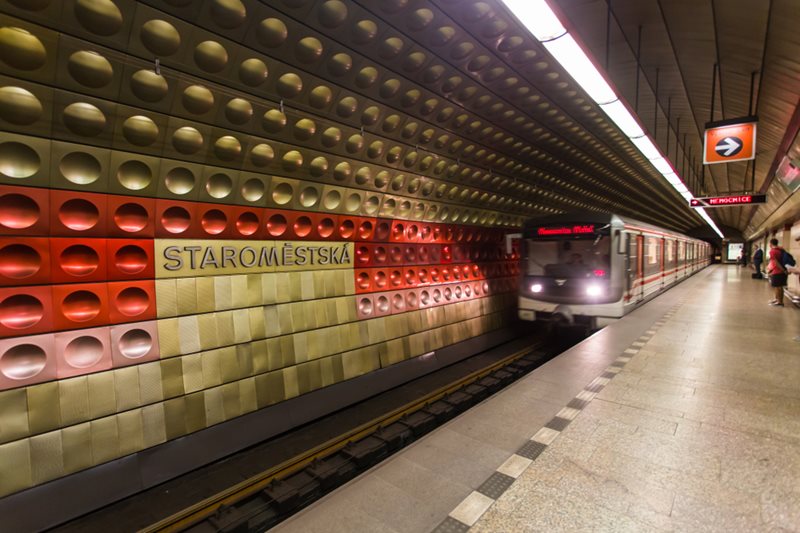
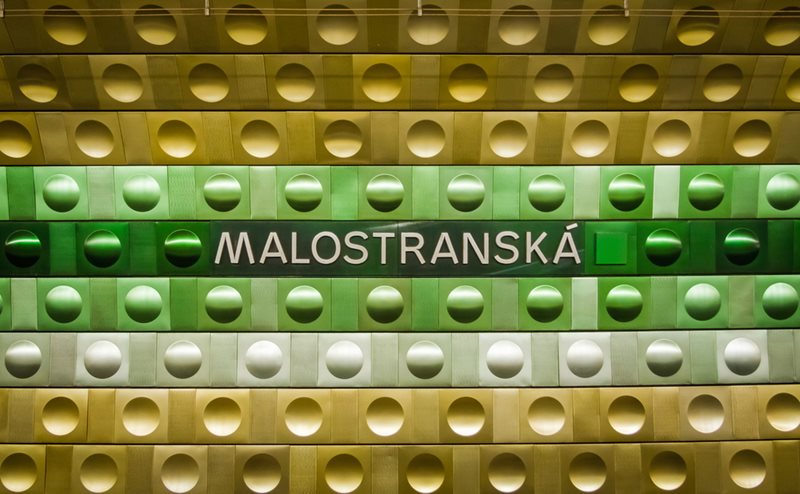
And what do the individual colours mean? Hradčanská is characterised by gold, symbolising Prague Castle; Staroměstská by red, referring to the Communist coup of 1948. Malostranská is green like the nearby gardens, Můstek is golden yellow symbolising trade. At the site of Muzeum station once stood the walls of the city fortifications, hence the brown colour. Náměstí Míru welcomes you in blue, symbolising peace. The blue-green and gold at Jiřího z Poděbrad pay tribute to the Czech King George of Poděbrady. The burgundy colour at Flora refers to grapes from historic vineyards.
Thematically, Line A was conceived as a tribute to the Middle Ages and Hussitism, which is reflected in its decoration.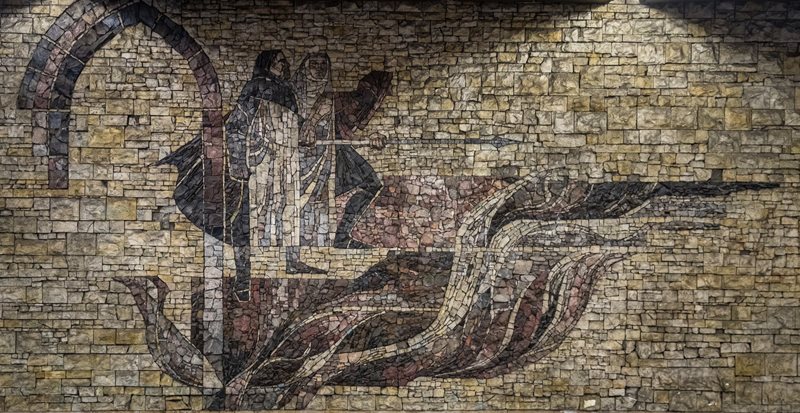
Želivského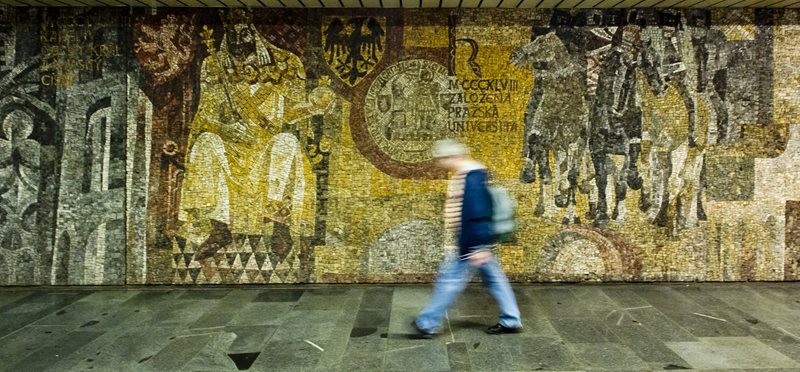
Karlovo náměstí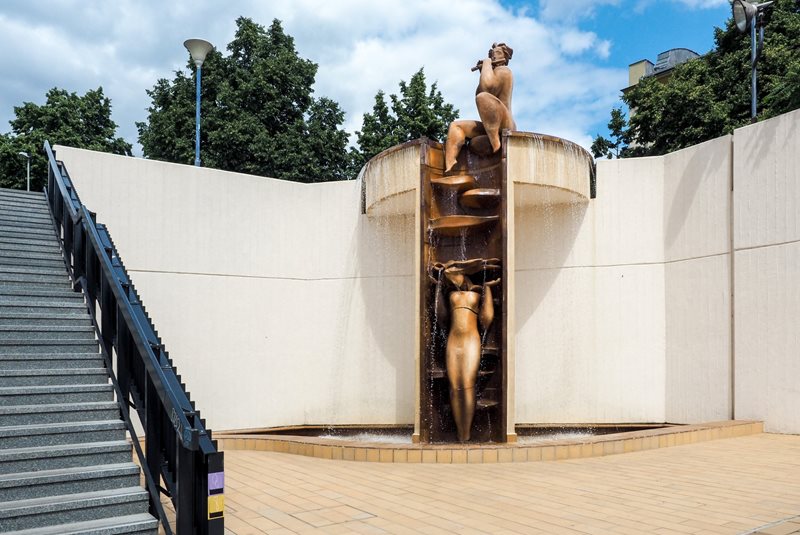
Vltavská
Route A: Aluminium “Breasts” and Medieval References
If you asked Prague residents what is typical of Line A, they would certainly answer aluminium “breasts” and “anti-breasts”. They are referring to the pressed cladding made of anodised aluminium that covers the walls behind the tracks. The cladding is so iconic that people buy individual pieces at various auctions and flea markets to hang on their walls at home. On the older sections, it comes in a golden champagne shade, complemented by colour-specific panels for each station.And what do the individual colours mean? Hradčanská is characterised by gold, symbolising Prague Castle; Staroměstská by red, referring to the Communist coup of 1948. Malostranská is green like the nearby gardens, Můstek is golden yellow symbolising trade. At the site of Muzeum station once stood the walls of the city fortifications, hence the brown colour. Náměstí Míru welcomes you in blue, symbolising peace. The blue-green and gold at Jiřího z Poděbrad pay tribute to the Czech King George of Poděbrady. The burgundy colour at Flora refers to grapes from historic vineyards.
Thematically, Line A was conceived as a tribute to the Middle Ages and Hussitism, which is reflected in its decoration.
What You Must See on Route A
- MALOSTRANSKÁ: A true gem. The vestibule is connected to the garden in front of the Wallenstein Riding Hall, and the entire space is decorated with copies of sculptures by the most important Czech Baroque sculptor M. B. Braun and his brother, a fountain, and beautiful metal grilles.
- MŮSTEK: An archaeological find of the original small bridge, which was part of the Old Town fortifications, is incorporated directly into the vestibule.
- ŽELIVSKÉHO: A bronze relief Allegory of Hussitism, a mosaic depicting the radical reformer Jan Želivský..
- JIŘÍHO Z PODĚBRAD: A stone relief depicting the Czech King George of Poděbrady.
Želivského
Route B: Playful Glass and Mosaics
Line B is characterised primarily by glass cladding on the walls behind the tracks and on the pillars. You will find a number of timeless glassmaking and ceramic works that are still visually striking.What You Must See on Route B
- PALMOVKA: In the underpass, you cannot miss the steel sculpture Gearing, symbolising the industrial character of the Libeň district..
- INVALIDOVNA: The stained-glass window Sport refers to the unsuccessful plan to host the Olympic Games in Prague in 1980..
- MŮSTEK: When descending from Jungmann Square, you can admire a 39-metre-long ceramic relief wall depicting Prague..
- KARLOVO NÁMĚSTÍ: The vestibule at Palacký Square is decorated with an interesting stained-glass window above the escalators and a circular glass object. In the second vestibule, take a look at the large mosaic depicting the Roman Emperor Charles IV and his era..
- ANDĚL (originally Moskevská): On the platform, bronze reliefs can be seen, and near the escalators from the bus terminal there is a controversial bronze sculpture from the Soviet era with the propaganda inscription Moscow–Prague (the work has recently been supplemented with an explanatory plaque).
Karlovo náměstí
Route C: Marble and Memories of Socialist Realism
The interior of the oldest section of Line C, connecting Florenc and Kačerov stations, is dominated by marble and distinctive ceramic mouldings that appear in all stations in various shapes and colours.What You Must See on Route C
- VLTAVSKÁ: Unusually shaped ceramic elements in the vestibule, and above all the beautiful ceramic fountain Faun and the Vltava in the square in front of the station, as well as the unmistakable circular stained-glass window Vltava in the hall.
- FLORENC: A stone mosaic depicting one of the battles of the Second World War near the Ukrainian village of Sokolovo..
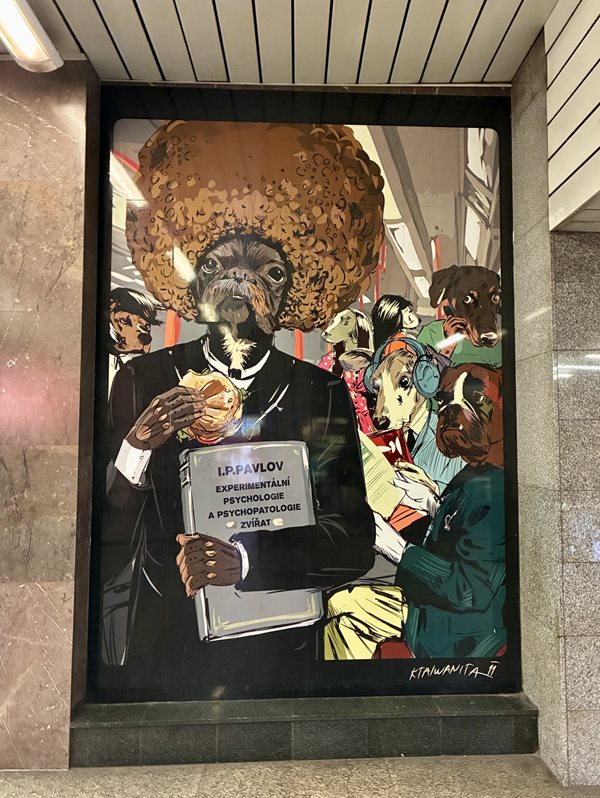
- I. P. PAVLOVA: Fragments of stone reliefs of lions from the original Baroque fortifications of the New Town and a witty large-format illustration of dogs reflecting the station’s name.
- VYŠEHRAD: A unique above-ground station with glass walls that allow passengers to enjoy panoramic views of Prague.
- KAČEROV: The vestibule is dominated by a sandstone relief with natural motifs, and near the ticket machines you will find stained-glass windows featuring left-turning spiral motifs.
- HÁJE (originally Kosmonautů): Mosaics and a bronze sculptural group depicting the first Czech cosmonaut, Vladimír Remek.
Vltavská
Prague Galleries Within Easy Reach of the Metro
Once you have explored the “art collection” of the Prague Metro, you can continue discovering art in a more traditional way. Get off at the right station and you will find yourself close to some of Prague’s leading galleries.- STAROMĚSTSKÁ station (A) will take you to the Museum of Decorative Arts in Prague and to the contemporary art gallery at the Rudolfinum; the Prague City Gallery at the House at the Stone Bell is also nearby.
- At MALOSTRANSKÁ (A), you can visit the Wallenstein Riding School of the National Gallery Prague; just a few steps away is the modern art gallery Kunsthalle Praha.
- Near NÁMĚSTÍ REPUBLIKY station (B) you will find the beautiful Art Nouveau Municipal House, which hosts prestigious exhibitions, and just a few metres further on is Art Palace Prague.
- From VLTAVSKÁ station (C), it is a short walk to the Trade Fair Palace of the National Gallery Prague and to the Holešovice Market Hall, where you can visit two contemporary art galleries – Trafo Gallery and The Chemistry Gallery.
- NÁDRAŽÍ HOLEŠOVICE (C) is the exit station for visitors to the DOX Centre for Contemporary Art.


.jpg?width=1920&height=1281&ext=.jpg)


