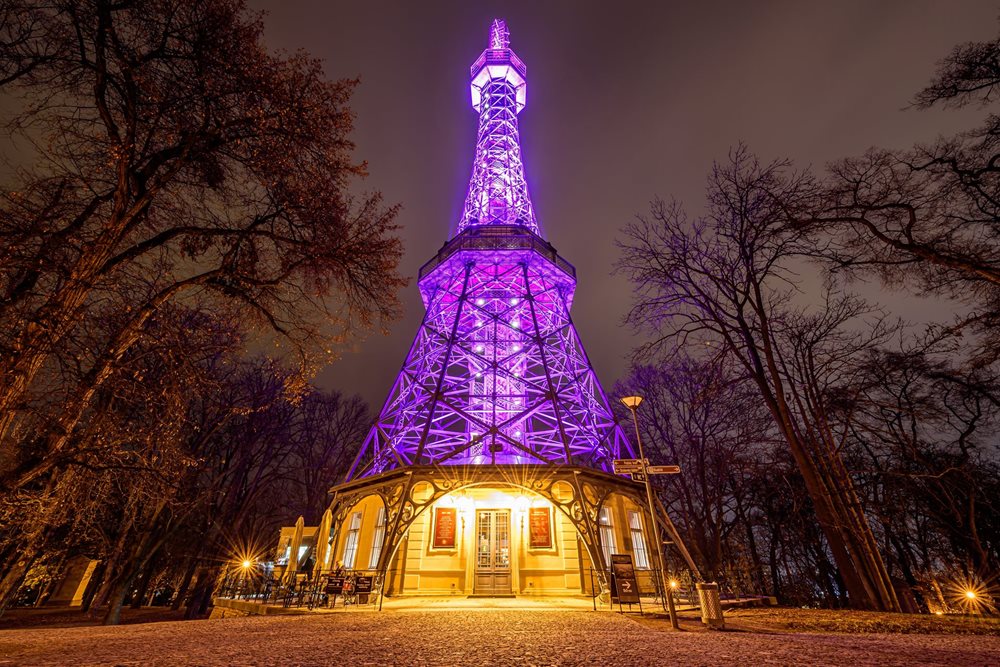
Funicular to Petřín and Petřín Lookout Tower
Both technical structures were inspired by Paris and it was originally planned to open them in 1891, the year in which a magnificent Jubilee Expo was held in Prague. It represented the technical progress of the then modern world. Everything went to plan and both were open on time. The first funicular took its passengers up to Petřín on 25 July 1891. The propulsion was designed in a rather interesting way – it ran on water. A specific volume of water was pumped into the upper carriage of the cable car so as to weigh down the bottom carriage, and the driver of the cable car simply braked. In 1931, its operation was switched to electricity.
And what about the Petřín Lookout Tower? The inspiration for its design is obvious – the Petřín Lookout Tower loosely copies the Eiffel Tower in Paris. And just like the funicular, the Tower was built by enthusiasts for the Jubilee Expo in 1891.
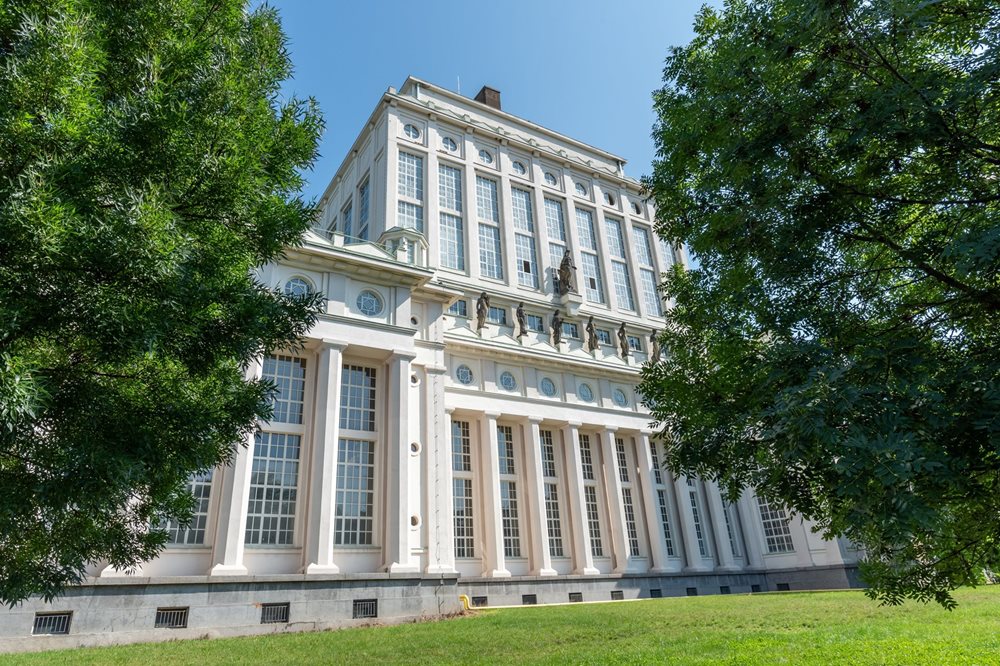
Trade Fair Palace (Veletržní palác)
Trade Fair Palace is a building in the Holešovice district of Prague and is one of the first and largest Functionalist buildings in Prague. It was intended for trade fairs, and was later the seat of foreign trade companies. The Palace was designed by architects Josef Fuchs and Oldřich Tyl, who won the architectural tender for its construction. It was built between 1925 and 1928. With a floor area of about 13,500 m2, it was at one time the largest building of its kind in the world. In the 1970s, the building completely burned down and a new use of the dilapidated building began to be sought. About 20 years later, the building was repaired and reopened.
Since 1976, the Trade Fair Palace has been home to National Gallery Prague. It houses several permanent exhibitions showcasing Czech and international art from the late 18th century to the present day. These include exhibitions dedicated to 19th- and 20th-century art, as well as modern and contemporary works. The palace also hosts temporary exhibitions and other cultural events.

Negrelli Viaduct
The Negrelli Viaduct connects Masaryk Railway Station in Prague with the opposite bank of the Vltava River and leads, among other things, to the Karlín district. Historically, it is the first Prague railway bridge over the Vltava and the second oldest Prague bridge over the Vltava overall. With a complete length of 1,110 metres and combined 87 arches, it is the longest railway bridge in the entire Czech Republic. The bridge was put into operation in June 1850. Until the beginning of the 20th century, it was the longest railway bridge in Europe. Over the years, many modifications and repairs have taken place. The bridge was last completely renovated in its original form from 2017-2020, when it was completely deconstructed and literally no stone was left unturned. A total of 100 brick, sandstone and granite arches were renovated, eight of which extend beyond the Vltava River. A total of 19 arches had to be completely dismantled and reassembled according to the original plans under the supervision of the National Heritage Institute. If you love anything to do with railways, you must not miss this industrial monument when visiting Prague.

Wastewater Treatment Plant in Bubeneč
The old wastewater treatment plant in Prague in the Bubeneč district is an important industrial monument. It was built between 1901 and 1906 and was used for wastewater treatment until 1967. The treatment plant project was developed by English engineer Sir William Heerlein Lindley. It is one of the industrial monuments of Prague that offers tours to its visitors. You will see preserved spaces with the remnants of original technological equipment, both for the actual wastewater treatment and related operations, and to ensure the running of the engines. Among other things the tour features a walk through the steam engine room and boiler room. The old wastewater treatment plant has been a Czech National Cultural Monument since 2010 and, thanks to its uniqueness and preservation, it is currently striving to be listed as a landmark in the UNESCO World Cultural and Natural Heritage Sites list.

Departure Hall of the Prague Main Railway Station
Some of Prague's industrial monuments are, however, still functional to this day, and you may be walking on their premises without even noticing them. For instance, a beautiful example of a technical monument is the historic steel roof over the railway track and platform of Prague’s Main Railway Station. The historic steel Prague Main Railway Station platform hall, together with the Art Nouveaudeparture building, dominates the entire area near Wenceslas Square. The steel arched two-aisle Hall built in 1905 by a Prague-based steelworks is now a listed monument. It was completely renovated a few years ago so you can now admire a building that not only serves its original purpose, but is also a beautiful example of period architecture.

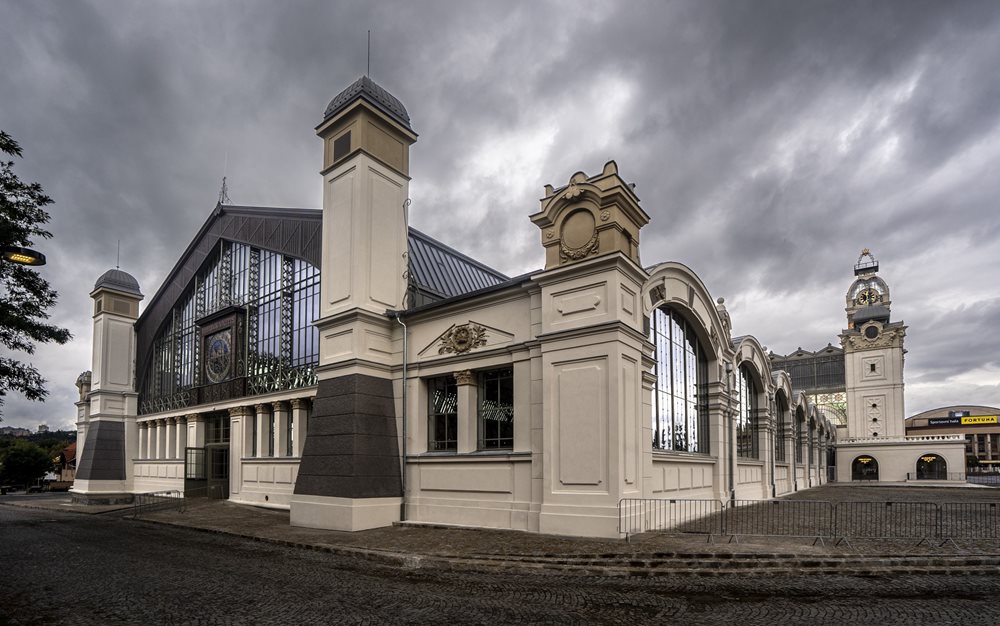
The Industrial Palace
The Industrial Palace at Prague’s Holešovice Exhibition Grounds is one of the finest examples of 19th-century industrial architecture. Designed by architect Bedřich Münzberger, it was built for the Jubilee Exhibition in 1891. Its most striking features are the monumental central hall with its steel structure and the distinctive clock tower. In 2008, the palace was severely damaged by a fire that destroyed its left wing. Following extensive reconstruction, completed in 2026, the building has regained its original appearance. Today, it once again hosts exhibitions, trade fairs and cultural events. The palace can be visited during selected exhibitions and cultural events or as part of organised guided tours. At other times, visitors can admire its architecture from outside while exploring the Exhibition Grounds.
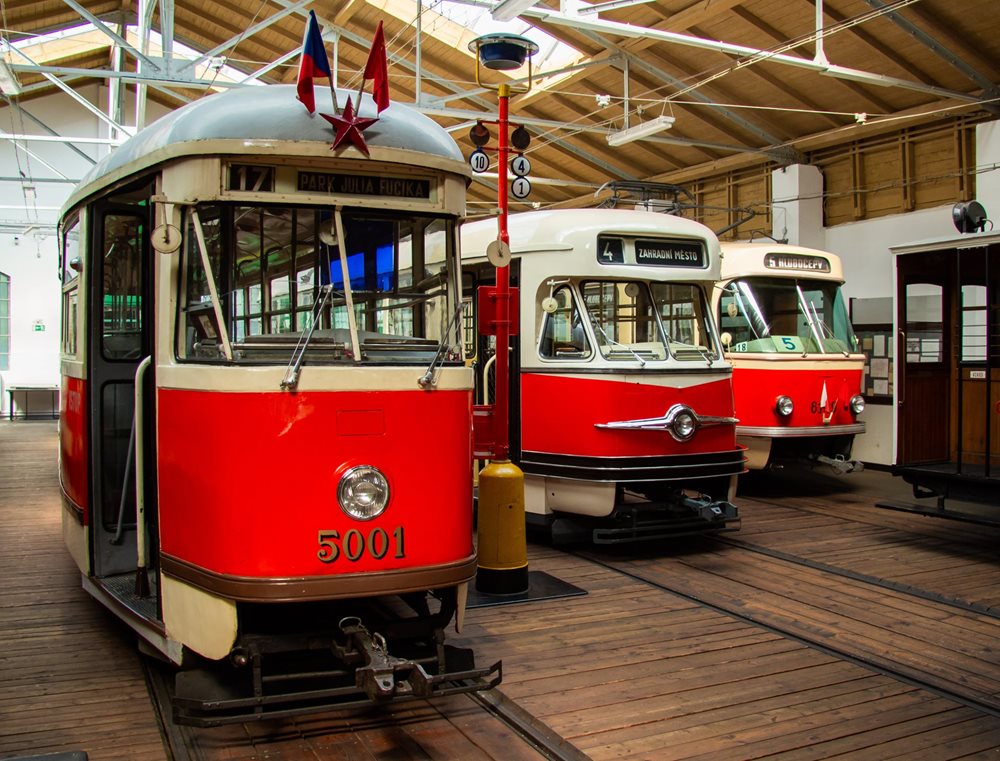
Střešovice Public Transport Museum
The Public Transport Museum ↗ is housed in a historic tram depot in Střešovice, built in 1909. It opened to the public in 1993 and offers a fascinating insight into more than a century of Prague’s public transport history. The collection features over forty historic vehicles, mainly trams and buses, as well as period photographs, tickets, technical drawings and other documents. Visitors can discover how public transport in Prague has evolved and explore the technology behind it. The museum is open at weekends and is located on Patočkova Street in Prague 6.
Letná Water Tower
The Neo-Renaissance Letná Water Tower ↗ was built in 1888 and originally supplied water to parts of Prague on the left bank of the Vltava River. It remained in service until 1913. Standing 38.3 metres tall, it is a distinctive architectural landmark of the Letná district. Following its restoration, the tower was given a new cultural and educational role. Visitors can learn about the history of water supply, climb to the viewing gallery and enjoy views of the city through a unique periscope. Another highlight is the Foucault pendulum, which demonstrates the Earth's rotation.
Podolí Waterworks
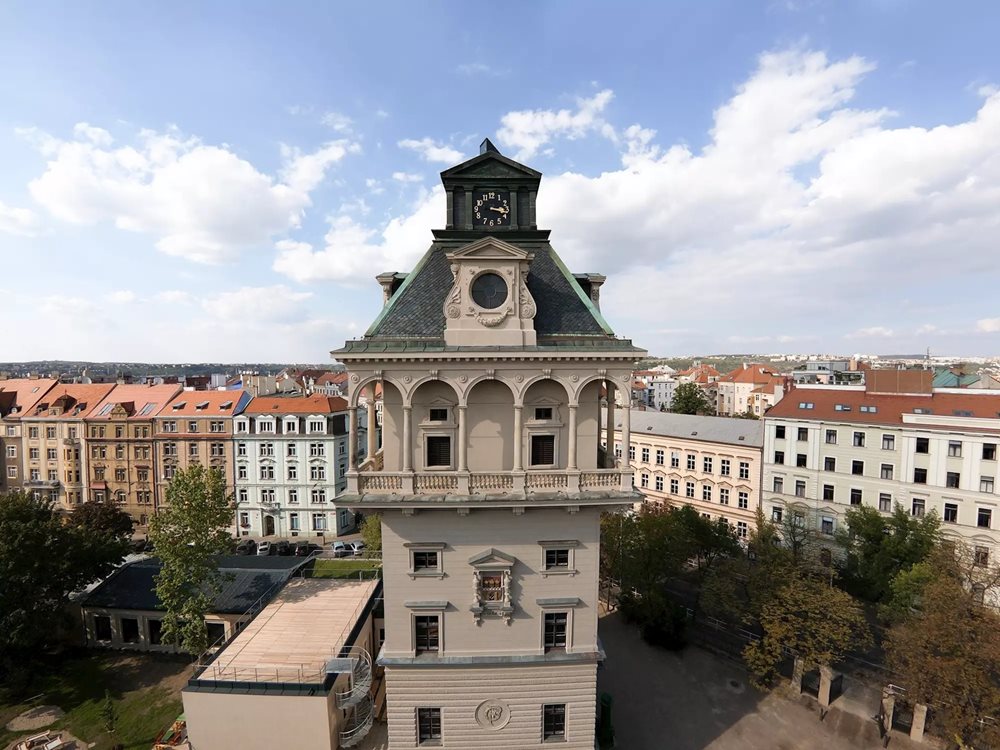
The monumental Podolí Waterworks , on the right bank of the Vltava River, is one of Prague’s finest examples of interwar industrial architecture. Designed by architect Antonín Engel, the complex was built between 1924 and 1929 and later extended in keeping with his original architectural concept. The complex also houses the Prague Waterworks Museum ↗, which traces the development of the capital’s water supply, from medieval times to the present day. Its collections include historical models, pumps, pipes and other technical exhibits.